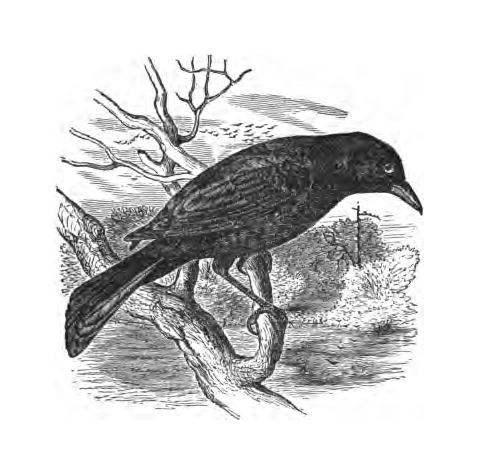
American Robin
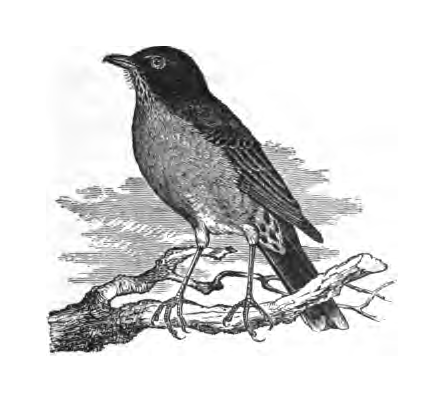
He may always be heard piping up above the rest of the daybreak chorus, and I have seen him sit on top of a stub in a storm when it seemed as if the harder it rained the louder and more jubilantly he sang.
Birds Through an Opera Glass is Florence Merriam Bailey's 1889 field guide. It is the first American field guide written by a woman and the first to teach birdwatching without firearms. This interactive online edition includes the full text of all 70 chapters, every original illustration, vernacular gloss tooltips that explain 19th-century bird names and Bailey's regional vocabulary, modern eBird and Cornell links for each species, modern xeno-canto audio recordings paired with Bailey's transcribed bird songs (a feature unique to this edition), and full-text search across the entire book.
Florence Merriam Bailey's Birds Through an Opera Glass (1889) was the first American field guide written for someone who might see a bird on a walk and want to know what it was, without owning a shotgun or a study skin. It described 70 species across short, observational chapters. Below are her 16 bird drawings (the Bobolink got two), with one of her sentences about each, and the 11 species whose songs she transcribed as inline music.
Each illustration is the inline drawing from Bailey's chapter on that species, paired with one of her sentences about the bird. Click through to the modern eBird account to compare what Bailey saw in 1889 with what's known now.
He may always be heard piping up above the rest of the daybreak chorus, and I have seen him sit on top of a stub in a storm when it seemed as if the harder it rained the louder and more jubilantly he sang.
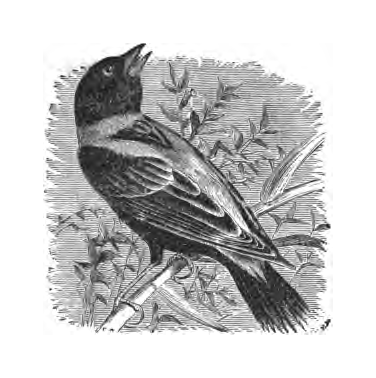
Robert o' Lincoln, the light-hearted laughter of June, brings him the spirit of the long bright days when the sun streams full upon meadows glistening with buttercups and daisies.
He looks as if his clothes were turned around.
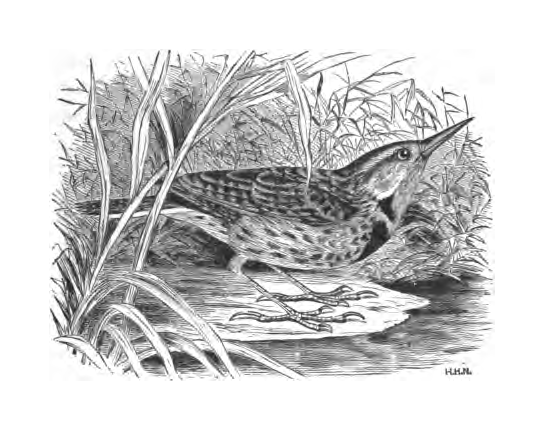
He is the hermit thrush of the meadows, and where the light-hearted bobolink's song jostles the sunbeams, he is as solitary and pensive as the lonely hermit.
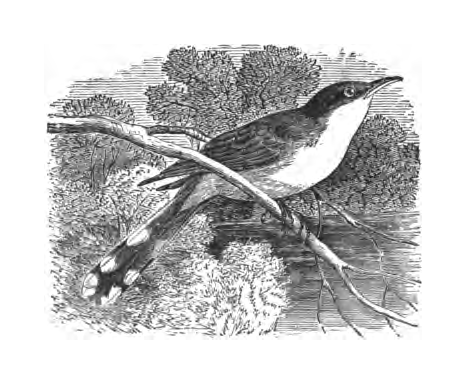
Unless you follow the cuckoo to his haunts, you rarely see him.
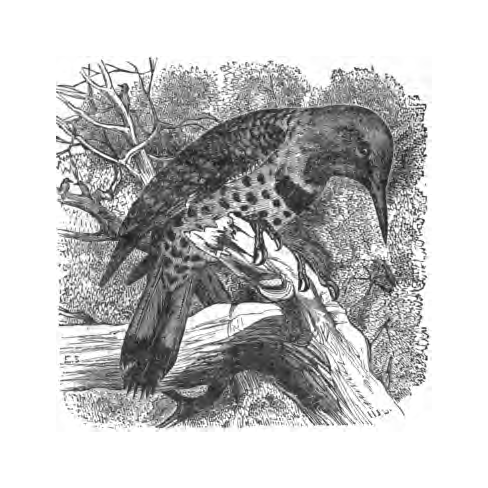
The song of the yellow hammer is like the German th—he hasn't any.
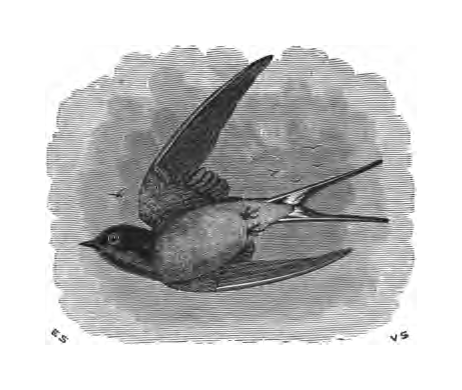
It is funny enough to see them light on a wire. Fluttering over it for a moment before settling down, they sway back and forth till you are sure they must fall off.
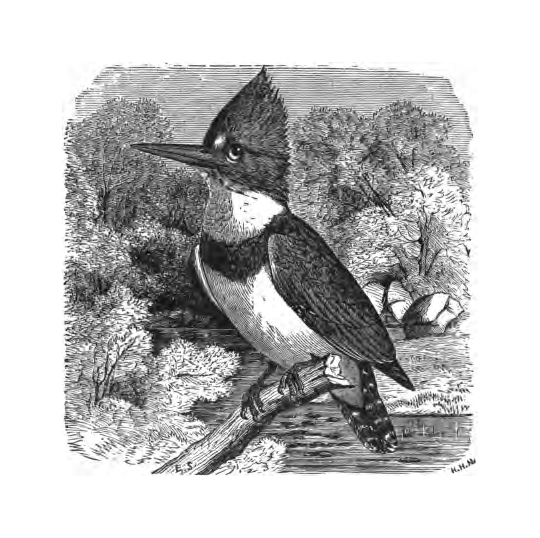
The kingfisher cares nothing for us or our habitations. He goes off by himself into the heart of the wilderness, to fly high and far over river and lake, calling loudly to the echoes as he goes.
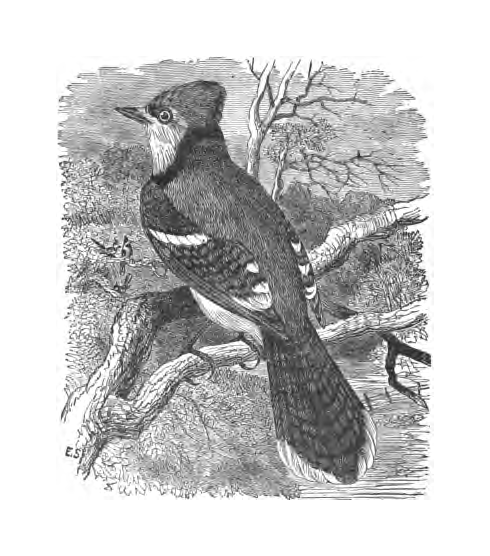
What a good business man the blue jay would make! All his motions are time-saving, decided, direct.
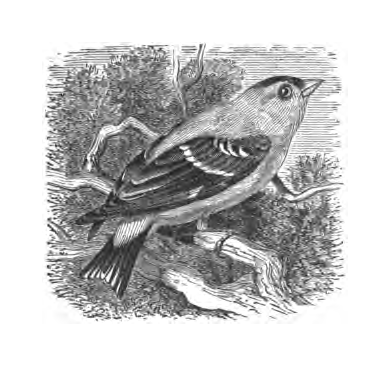
And what dainty light blue shells they had. Just as if bits of blue sky had fallen into the nest!
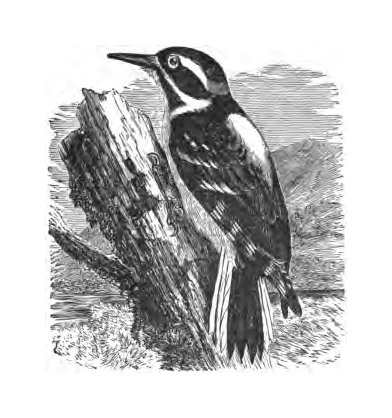
Its rhythmical rat tap, tap, tap, tap, not only beats time for the chickadees and nuthatches, but is a reveille that sets all the brave winter blood tingling in our veins.
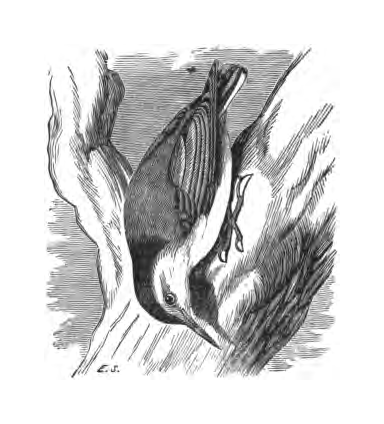
There in their tops are the nuthatches, for they have deserted the tree trunks for a frolic. They are beechnutting!
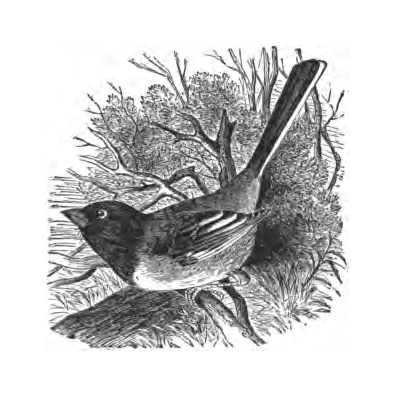
His back is black and his sides match the crisp curled beech leaves that color the wood paths in fall.
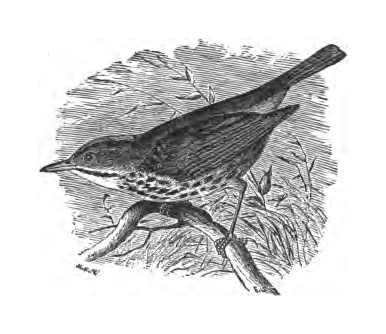
She spread out her wings and tail, dragging them along the earth as if helpless. On finding that we would not accept that decoy, she tried another plan.
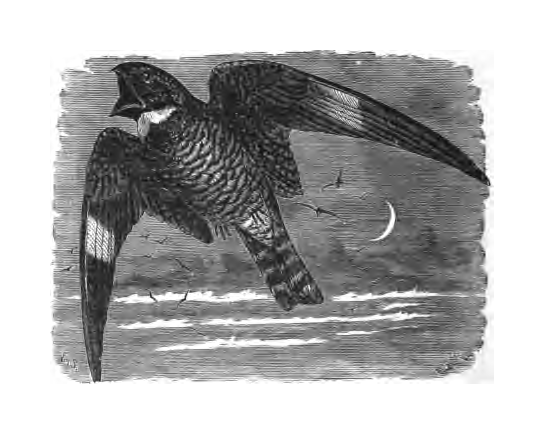
Just at twilight, above the chippering of the chimney swifts, you will often hear sharp cries that startle you into looking overhead.
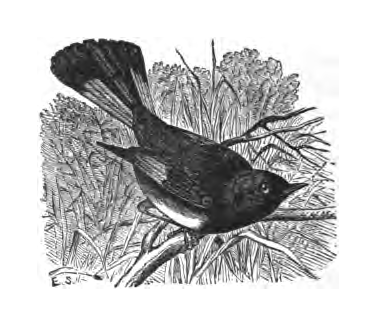
A little housewife will sometimes fly to her nest with strips of bark four inches long streaming from her bill.
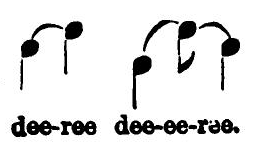
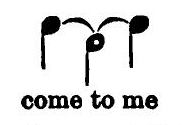
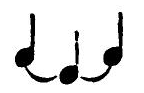
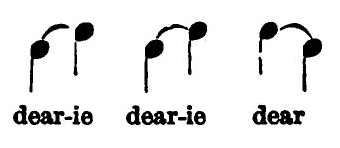
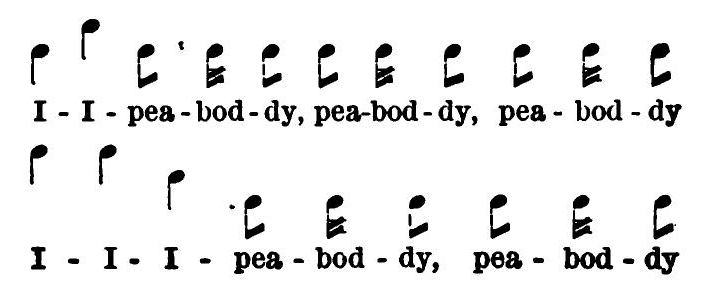
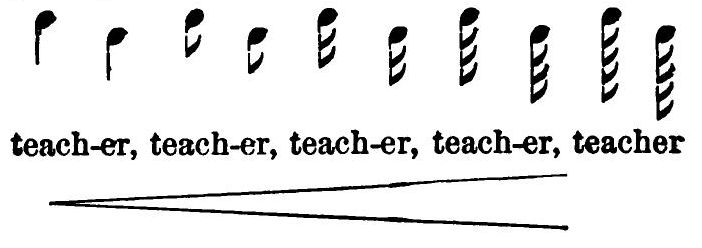
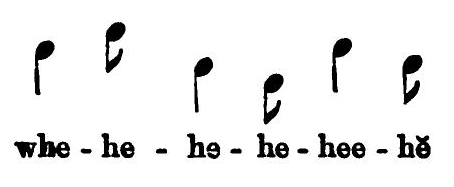
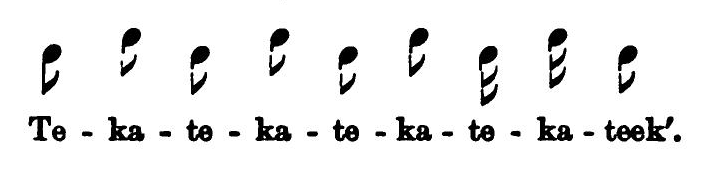
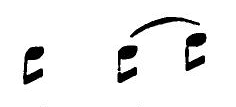
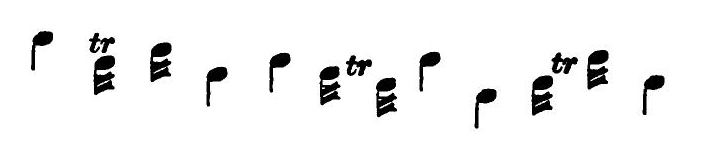
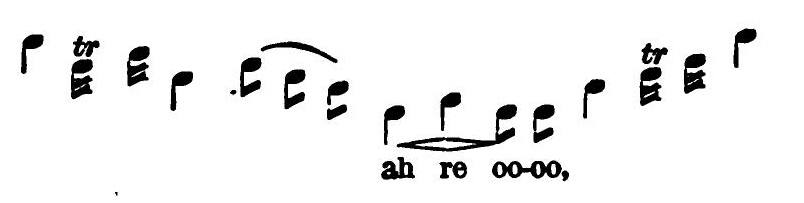
Bailey transcribed bird songs as syllabic mnemonics with inline music glyphs underneath, not as full five-line staves. The transcriptions below are exactly as they appear in the 1889 text. Some, like the Wood Pewee's three song variants, predate later academic accounts (Wallace Craig's The Auk paper on the same songs came out 37 years later, in 1926).